2026-10-19 · Sean O'Brien
Chicago Street Permit Rules for Placing a Dumpster on Public Property
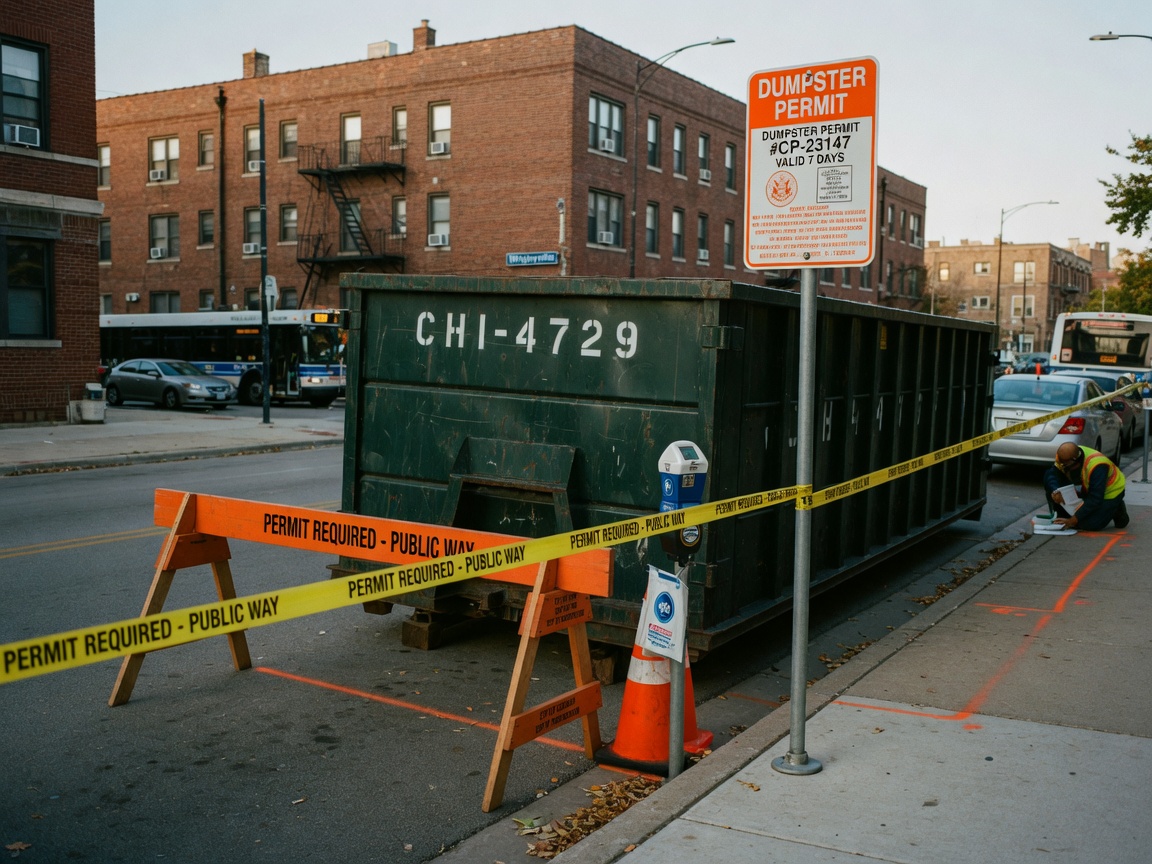
In Chicago, a permit from the Chicago Department of Transportation is required before placing any dumpster on public property such as streets or alleys. The process typically starts with submitting an application at least several days in advance, and approval depends on location, duration, and traffic impact in areas like Lincoln Park or the West Loop.
Permit Application Process
Applicants must provide details on dumpster size, placement dates, and exact address when filing with CDOT. Forms are available online or at city offices, and fees are assessed based on the number of days the unit occupies the space. In dense blocks of Wicker Park or Logan Square, inspectors often require additional signage or barriers to maintain pedestrian access. Processing can take longer during peak construction months when multiple requests compete for review. Homeowners in Bridgeport or Pilsen frequently combine this step with utility locate requests to avoid underground lines. Once approved, the permit must be displayed visibly on the dumpster itself.
Neighborhood and Housing Factors
Older housing stock in Hyde Park and Andersonville often features narrow streets and limited off-street space, making public placement more common. Tighter alleys in Uptown and Rogers Park can trigger extra CDOT conditions for alley access. Newer developments in the South Loop or West Loop sometimes allow easier sidewalk use but still require the same street permit. Residents near the Chicago Riverwalk or Grant Park face added scrutiny due to high foot traffic and event schedules. Placement near landmarks like Navy Pier or Soldier Field adds layers of coordination with event permits.
Seasonal and Weather Impacts
Chicago's humid continental climate brings hot summers that soften asphalt, requiring crews to use plywood under dumpsters to prevent surface damage in Lakeview or Lincoln Park. Cold winters with snow and ice complicate access, especially when plows narrow streets in Oak Park or Evanston. The article How Chicago Winter Snow Affects Dumpster Access and Pickup details how frozen ground and salt can shift unit stability. Heavy summer rains can also turn soil soft in Rogers Park, affecting safe positioning on public rights-of-way.
Private vs Public Placement Options
When street permits prove difficult, many property owners in areas like Millennium Park or the Art Institute of Chicago vicinity shift units to driveways or private lots. This avoids CDOT timelines but requires checking local zoning for residential zones. Residential Dumpster Rental often helps customers evaluate both options before committing. In neighborhoods with limited curb space such as Pilsen or Bridgeport, private placement can reduce delays during busy summer months.
Coordination With Rental Providers
Local operators familiar with Cook County routes can assist with permit paperwork and recommend optimal timing. Factors that change dumpster rental prices across Chicago neighborhoods include permit wait times and access restrictions, as outlined in Factors That Change Dumpster Rental Prices Across Chicago Neighborhoods. Customers in Evanston or Oak Park benefit from providers who already know cross-border rules when units cross city lines.